A US Automotive Manufacturing Firm

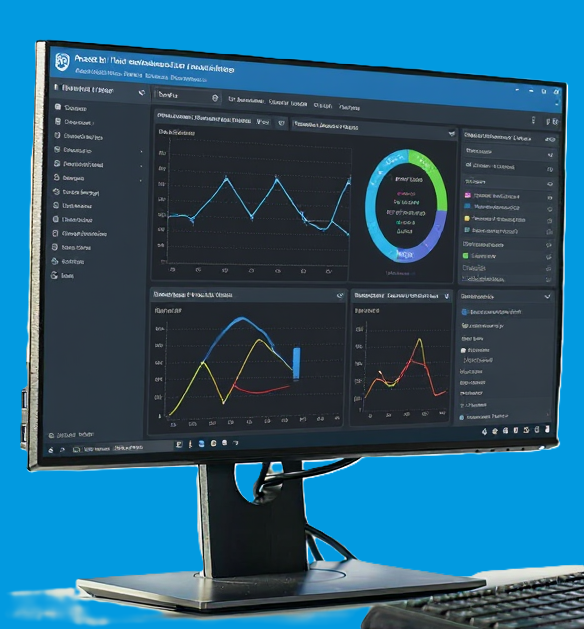
Manufacturing employee watching Power BI dahsborad for predictive maintenance for machinery

A US Automotive Manufacturer

Transforming Manufacturing Operations with AI-Powered Predictive Maintenance for Equipment Reliability and Cost Savings

CLIENT

Leading US Automotive Parts Manufacturer

INDUSTRY

Automotive Manufacturing

SERVICES

Power BI Consulting

IoT Application Development

TECHNOLOGIES

Machine Learning, IoT Sensors, Azure Cloud, Power BI

The

Challenge

A leading automotive parts manufacturer based in Springfield, Missouri operates 24/7 production across three facilities with 150+ critical machines. The company supplies major automotive OEMs nationwide and generates $420 million in annual revenue. With a significant market presence in automotive systems manufacturing, the company recognized operational efficiency challenges that were impacting production schedules and customer satisfaction.
The manufacturing firm was trapped in a reactive maintenance cycle where equipment failures dictated production schedules rather than planned operations. This reactive approach created cascading problems across the entire operation.
“It was 2 AM when our main CNC machining center failed—again. We had a $300,000 order due in 36 hours, and we were dead in the water. This was the third time that month.”

— VP of Manufacturing Operations

Critical Operational Issues:

  • Unpredictable Equipment Failures: CNC machines (Computer Numerical Control machines that precisely cut and shape metal parts) experienced unexpected breakdowns averaging 12 times per month across all facilities.
  • Hidden Equipment Deterioration: Hydraulic systems (pressurized fluid systems that generate force), injection molding presses (machines that melt and shape plastic under high pressure), and industrial robots were degrading silently until catastrophic failure occurred.
  • Inefficient Maintenance Practices: The team simultaneously over-maintained some equipment by replacing perfectly functional parts on fixed schedules, while under-maintaining others by missing early warning signs of impending failure.
  • Supply Chain Disruptions: Unplanned downtime meant rush orders for spare parts, overnight shipping costs, and frantic calls to suppliers—multiplying costs by 3-5x normal rates.

Business Impact:

  • $6.8 million in annual losses from unplanned downtime and emergency repairs
  • 18% of production capacity lost to equipment failures and maintenance issues
  • Customer confidence eroding with two major contracts at risk due to delivery delays
  • Maintenance team burnout from constant firefighting mode with no time for improvement
  • Inventory management challenges from either stockpiling expensive parts “just in case” or scrambling when failures occurred
“Our maintenance strategy was basically ‘run it till it breaks.’ We knew there had to be a better way, but we didn’t know where to start. The machines weren’t telling us when they needed help—until it was too late.”
— Plant Manager, Springfield Facility

Codeplateau's

Strategic Solution

The management team at the manufacturing firm partnered with Codeplateau to implement a comprehensive predictive maintenance machine learning solution. Our team brought together expertise in IoT application development, Power BI consulting, and industrial AI to create a predictive maintenance system tailored for manufacturing operations.

The solution deployed multiple types of predictive maintenance in manufacturing based on equipment criticality and failure modes, creating a 24/7 support model across Missouri management team and our engineering center in Pune, India.

Predictive Maintenance Technologies Deployed:

By solving the mission-critical machine prectiability puzzle and providing expert Power BI and development services, Codeplateau delivered rapid, measurable value: 

Predictive Maintenance Type Implemented Applied to How it works Real example
Vibration Analysis CNC machining centers, industrial robots, conveyor systems IoT sensors measure vibrations in rotating components. Machine learning algorithms learn the normal vibration signature of each machine, then flag unusual patterns indicating bearing wear, misalignment, or imbalance—weeks before human detection is possible. Detected bearing degradation in Robot Arm #7 fourteen days before predicted failure, allowing scheduled replacement during planned downtime
Thermal Monitoring Electrical panels, motors, hydraulic systems IoT temperature sensors and thermal camera scans identify hot spots indicating electrical resistance, friction, or fluid leaks. AI learns normal thermal patterns under different load conditions. Identified a degrading electrical connection in Press #12 running 22°C hotter than baseline—preventing potential fire hazard and $180,000 equipment damage.
Oil Analysis Hydraulic systems, gearboxes, compressor Regular oil sampling combined with inline sensors track contamination, viscosity changes, and wear particle counts. AI correlates fluid degradation with equipment condition. Oil analysis showed elevated iron particles in Hydraulic Unit #4, indicating gear wear. Scheduled maintenance replaced components before system failure, saving $85,000 in damage costs.
Motor Current Analysis Electric motors, pumps, fans, compressors Analyzes electrical current drawn by motors to detect rotor problems, stator issues, or load imbalances without physical sensors on equipment. Identified developing rotor bar cracks in Conveyor Motor #3B through current signature changes, enabling proactive replacement during scheduled weekend downtime.

Action

Steps

  • IoT Sensors : 850+ sensors across all equipment (vibration, temperature, pressure, acoustic, current)
  • Edge Computing : Local processing for real-time alerts—no dependency on cloud connectivity Machine Learning Models Random Forest, LSTM networks, Isolation Forest for anomaly detection
  • Cloud Analytics : Azure-based platform for historical analysis, model training, cross-facility insights
  • Integration Layer : Connected to existing CMMS, ERP, and SCADA systems—no data silos
  • Mobile Accessibility : Maintenance team gets real-time alerts and diagnostics on tablets and phones

Implementation Journey: From Pilot to Full Scale


  • Month 1-2: Pilot Phase : Started with 15 critical CNC machines in Springfield. Installed sensors, baseline data collection, initial model training. Quick win: Prevented 2 major failures in first 6 weeks.
  • Month 3-4: Model Refinement : Pune engineering team worked overnight shifts (US daytime) to tune ML models, reduce false positives from 28% to 11%, and customize alerts for different equipment types.
  • Month 5-6: Facility Expansion : Rolled out to all Springfield equipment, then to two other facilities. Integrated with existing work order system. Maintenance team training completed.
  • Month 7-12: Optimization & Scale : Continuous learning enabled—models improved with every maintenance action. Added predictive spares optimization. Achieved full ROI.

The

Result

Operational Excellence Achieved:


73% Reduction in Unplanned Downtime:
From 156 hours/month to 42 hours/month across all facilities
89% Prediction Accuracy Rate:
87 of 98 predicted failures materialized as forecasted
62% Reduction in Maintenance Costs:
From $7.2M annually to $2.7M through optimized scheduling

Beyond the Numbers: Intangible Benefits

Team Morale Transformed: Maintenance team shifted from reactive firefighting to proactive problem-solving. Employee satisfaction scores increased 34 points. Voluntary turnover dropped from 23% to 7%.
Customer Relationships Strengthened: On-time delivery improved from 84% to 98.7%. Secured two new multi-year contracts worth $18M based on improved reliability.
Production Planning Confidence: Manufacturing can now commit to aggressive schedules, knowing equipment reliability is predictable. Enabled acceptance of 15% more orders without capacity expansion.
Knowledge Retention: System captures knowledge from retiring technicians. Machine types and failure patterns are documented and learned by AI models.
Cross-Facility Learning: Patterns identified in USA inform maintenance strategies to Pune Power BI Consultants and vice versa—multiplying improvements across the network.

Related Case Studies

AI CRM: Your Strategic Salesforce Partner in the US

AI CRM: Salesforce implementation Partner company in the US

AI CRM: Your Salesforce Partner in the US Needs a Strategy Focus

Introduction

The US business landscape is defined by speed, scale, and compliance. For companies in Missouri and beyond, Salesforce isn’t just a software purchase anymore; it’s the operational heart of your entire Customer 360 vision.
If you’re looking for Salesforce partner companies in the US right now, you’re not just shopping for certified developers. You’re searching for a strategist who can translate the hype of AI, Data Cloud, and Hyperforce into tangible ROI that works for your American balance sheet.

This discussion offers insights into the real challenges facing US mid-market and enterprise companies. We explore why choosing the right Salesforce implementation partners in US regions—from St. Louis to Silicon Valley—is the difference between a successful digital transformation and a costly, over-customized failure.


The Salesforce Implementation Risks Your Partner Must Address

The biggest challenges for US businesses moving to or optimizing Salesforce aren’t technical; they’re strategic and cultural. Many Salesforce partner companies in the US still focus purely on configuring the platform, overlooking the critical change management and data governance headaches that kill adoption.

The core problem is a failure to prioritize User Adoption over simple deployment. A “Go-Live-Ready” system works; a truly Adoption-Ready system has been designed around your end-user’s day-to-day reality. As executives and decision-makers, your job is to ensure the investment pays off.

1. The ROI Mirage: Unfocused Goals

The most common failure point is the ROI Mirage—starting the project without clear, quantifiable business outcomes. Executives approve the budget with broad goals (“improve sales efficiency”), but the Salesforce implementation effort loses direction because the team lacks concrete KPIs (e.g., “reduce lead-to-opportunity time by 20%”).

 
  • The Strategist’s Approach: A quality partner doesn’t touch the code until they facilitate a deep-dive, focused entirely on Value Mapping. They define the three most important, measurable outcomes for your sales, service, and marketing teams, ensuring every configuration decision directly ties back to that ROI.

2. The Customization Spiral and Technical Debt

US mid-market companies often customize Salesforce excessively to fit old, broken processes. This creates a Customization Spiral—the system becomes fragile, slow to upgrade, and expensive to maintain. This technical debt is the silent killer of long-term scalability.

  • Strategic Focus: Look for partners who prioritize Salesforce governance strategy and leverage low-code automation (like Flow and Generative AI tools) over custom Apex development wherever possible. They should aim to empower your business users (“citizen developers”) to build simple automations while they maintain the complex architecture and API integrations.
 

3. Data Disarray and The Unified Customer View

With the rise of Data Cloud, the imperative for a unified customer view has never been higher. Yet, many companies struggle with inconsistent, duplicated, or stale data flowing in from legacy ERP systems, marketing platforms, and customer service tools.

  • The Data-First Mandate: A reliable partner treats data as the most strategic asset. Before any migration, they execute a rigorous data hygiene and mapping audit. Their expertise in integrating Salesforce with BI tools (like Tableau and Power BI) ensures your data is clean, unified, and actionable, transforming your fragmented records into a single source of truth.

Beyond Configuration: Three Trends Driving Success for US Companies

To thrive in the competitive US market—whether you’re in Missouri, the financial hubs of New York, or the tech centers of Seattle—the firm you choose must be fluent in the future.

Trend 1: AI, Not as a Feature, but as an Agent (Agentforce)
The era of simple AI chatbots is over. Salesforce is rapidly moving toward multi-agent systems (Agentforce) where specialized AI agents collaborate across departments.
  • The Partner’s Edge:
    Look for firms that focus on AI strategy and implementation. This means setting up Einstein GPT to draft personalized service responses, optimizing your Service Cloud with AI-driven routing, and using predictive analytics to flag at-risk customers before they churn. They make sure the AI is not just decorative but actively driving revenue and cutting service costs.
     

Trend 2: The Multi-Cloud Integration Imperative

Few modern US businesses run on a single cloud. Your Salesforce Implementation Partner in the US must have a deep understanding of multi-cloud architectures (integrating with AWS, Azure, and Google Cloud) and enterprise platforms (like SAP or Oracle).
  • The Integration Superpower:A true expert’s focus is not just limited to Sales Cloud or Service Cloud. They focus on complex platform integration services, using middleware tools like MuleSoft to ensure seamless data flow. If your logistics team needs real-time inventory from SAP delivered to the Sales Cloud, that requires a partner with deep integration experience.
Trend 3: Compliance, Governance, and Hyperforce Agility
In the US, regional data laws and industry regulations (like HIPAA for healthcare or FINRA for finance) are non-negotiable.
  • Governance and Security First:
    The right partner embeds Salesforce security and compliance directly into the architecture from day one. They leverage Hyperforce Architecture to ensure fast, secure deployment and to simplify your compliance footprint across different regions, guaranteeing the system meets US data residency and privacy mandates.


The Right Partnership: Global Expertise, Local Trust

When selecting a partner, look for a firm with proven, global enterprise experience but with the local presence and accountability you need in the US.
An implementation isn’t over when the system is switched on. A true Salesforce implementation partner is invested in your long-term success. They focus heavily on Change Management and User Adoption training to ensure your teams don’t just use the new system, but embrace it.

Ready to move past generic configuration and build an intelligent, data-driven CRM ecosystem?

Let’s turn your Salesforce platform into the competitive advantage it was meant to be.

The time for strategy is now. Connect with a trusted partner to schedule a personalized CRM Strategy Assessment and secure your digital future.

Click Here to Get the Executive Checklist (PDF) Today!


    Businessman working to calculate hidden cost of flawed Salesforce implementation

    Robotic Process Automation

    Robotic Process Automation

    Achieving Operational Excellence in manufacturing through Power Platform development
    CLIENT

    Anand Mando E-Mobility Pvt. Ltd

    INDUSTRY

    Manufacturing

    SERVICES

    Power BI Consulting, Business Intelligence

    TECHNOLOGIES

    Power Platform Development, Sharepoint

    Anand Group is a leading group of automotive manufacturing companies with a country-wide presence and several business verticals. It has a significant market presence in the aftermarket and international markets and provides automotive systems and parts to over fifty businesses.

    The

    Challenge

    The Friction of Paper in a Digital World

    Transforming Manual PDF Processing into Intelligent Pricing Automation

    For a leading global manufacturer, efficient supply chain management hinges on accurate and timely data. However, a critical process was still chained to manual labor: the daily updating of product prices and Purchase Order (PO) numbers based on vendor-supplied PDF files.

    Each day, dozens of new or updated price lists arrived as PDFs. Analysts were forced to:

    • Manually open each PDF.
    • Visually locate key data points (Price, PO Number, Order Details).
    • Type that information into an Excel price master.
    • Manually compare the new price against the existing record to spot changes.

    This process was slow, prone to transposition errors, and generated zero real-time visibility. It was a classic “human firewall” bottleneck, consuming valuable time and delaying critical pricing decisions.

    The client needed a unified, secure, and intelligent system that could effortlessly transform static PDFs into dynamic, actionable data.

    The

    Solution

    A Custom, End-to-End Power Platform Workflow

    At Codeplateau, we approached this challenge not as a simple data extraction task, but as an opportunity to build a custom, scalable data engine. We leveraged our expertise as a leading power platform development company to construct a seamless, multi-layered solution using Power Apps, SharePoint, and Power Automate. 

    1. The Human Gateway (Power Apps UI)

    We started with the user experience. Our expert power apps developers engineered a clean, intuitive interface that serves as the single point of entry. 

    • Secure Upload: Users simply drag-and-drop their PDF files directly into the Power App. 
    • Automatic Tagging: Upon upload, the app automatically captures crucial metadata (Upload Date, Time, and User ID), ensuring a robust, tamper-proof record from the start. 
    1. The Secure Foundation (SharePoint Storage)

    All uploaded files are instantly and securely archived in a centralized SharePoint Document Library. SharePoint acts as the secure, auditable file repository, maintaining version history and supporting the metadata captured by the Power App for compliance tracking. 

    1. The Digital Brain (Power Automate & RPA)

    The moment a file lands in SharePoint, a Power Automate flow is triggered—this is the RPA engine that drives the intelligence: 

    • Intelligent Extraction: The flow employs advanced data extraction techniques (often including AI-powered components like AI Builder for enhanced accuracy) to identify and pull the PO Number, Price, and other order details directly from the PDF structure. 
    • Data Synchronization: The extracted data is immediately mapped to the central Excel price master, stored securely on SharePoint. 
    • Real-Time Validation & Update Logic: The flow performs an immediate, rules-based check: 
    • If the PO Number exists, it verifies the price. If the price is different, the record is automatically updated with the latest value and flagged. 
    • If the PO Number is new, a new entry is created. 
    1. The Strategic Insight Layer (Power BI Integration)

    To turn data into strategic advantage, we deployed the final piece: the visualization layer. Building on our power bi consulting services foundation, we connected a dashboard directly to the updated price master. This gives leadership and procurement teams real-time strategic clarity: 

    • Price Change Tracking: Instant visualization of current and historical price variances by vendor, product, and date. 
    • Process Efficiency: Visibility into the automation’s performance (e.g., number of PDFs processed, number of exceptions). 
    • Proactive Negotiation: Empowering procurement teams with data to spot unfavorable price trends and optimize vendor contracts. 

    The

    Result

    Real-Time Data, Zero Friction

    From Manual Chaos to Real-Time, Zero-Touch Automation

    Codeplateau transformed a time-intensive, error-prone manual process into a real-time, zero-touch operation.

    Key Impact Metrics

    Metric Before Codeplateau (Manual) After Codeplateau (Automated) Impact
    Data Entry 100% Manual 0% Manual Eliminated Errors
    Price Change ID Hours or Days Instantaneous Real-Time Visibility
    Data Centralization Fragmented Spreadsheets Single SharePoint Source Enhanced Security & Audit
    Employee Focus Copy-Pasting Data Strategic Analysis Value Reclaimed

    The Value Multiplier

    This project underscored that true automation is about empowering people, not replacing them. By eliminating the frustration of manual data entry, the manufacturer’s team can now leverage the data instantly to make informed decisions.

    We didn’t just automate a workflow; we delivered a competitive edge, proving that the right power platform development company can turn a daily grind into a strategic asset.

    Ready to Transform Your Operations?

    Ready to harness the Power Platform to solve your most complex data extraction and reconciliation challenges? Let’s talk about how our power apps developers and Power BI consulting services can drive your digital transformation.

    Related Case Studies

    Beyond the Go-Live: Cost of Flawed Salesforce Implementation

    Businessman working to calculate hidden cost of flawed Salesforce implementation

    Beyond the Go-Live: The Hidden Cost of Flawed Salesforce Implementation

    Introduction

    Implementing Salesforce is one of the most significant strategic decisions a company makes, yet for many, the investment stalls because they choose a Salesforce implementation partner who delivers the bare minimum—the “good enough” solution.
    In a market saturated with Salesforce partner companies, the true danger is an implementation that is technically complete but strategically incomplete. It’s the difference between a system that merely functions and one that fundamentally changes how your business operates, specifically in high-value areas like Sales Cloud and Service Cloud.

    Download the Tool That Guarantees Control:

    Skip the common mistakes. The Executive Checklist for Salesforce Implementation is your shortcut guide to a predictable launch. Use it to lock down your budget and hold your partner accountable.
     

    Get the Executive Checklist (PDF) Sent to Your Inbox (Requires Email Address)


    The True Challenge: Adoption-Ready vs. Go-Live-Ready

    A common challenge is the post-go-live plateau. Many organizations invest heavily, only to find their teams complain the new system is “too clunky” or “doesn’t match our process.”

    The core problem is a failure to prioritize User Adoption over simple deployment. A “Go-Live-Ready” system works; a truly Adoption-Ready system has been designed around your end-user’s day-to-day reality. As executives and decision-makers , your job is to ensure the investment pays off.

    Identifying & Eliminating Project Risks

    Most Salesforce project failures aren’t technical; they’re due to poor planning, weak governance, and unclear expectations. Your choice of Salesforce implementation partner must eliminate these human and process risks.

    The Executive Checklist identifies several non-negotiable governance steps that prevent failure before any code is written, ensuring your success:
    • Scope Lock: Freezing the “Must Have” feature list for the Minimum Viable Product (MVP) using the MOSCOW Method to prevent budget-killing scope creep.
    • Dedicated Ownership:
      Ensuring a single, internal Project Owner is assigned full authority and at least 50%+ time to the project to provide immediate answers and avoid costly delays.
    • Data as a Project:
      Treating data cleansing, migration, and de-duplication with a dedicated budget and deadline, running it as a parallel project.

    Salesforce Implementation: Decisiveness is the Edge

    Every credible Salesforce implementation partner will tout certifications as Sales Cloud and Service Cloud experts. But the real value is found in a partner’s ability to be decisive—to guide you away from replicating old, inefficient processes in Salesforce. A good partner will take the order; a transformative one will challenge the request for the sake of future agility.

    Guaranteeing Quality Beyond the Build

    Don’t let your Salesforce partner company define success. As you move into execution, you must enforce checks that guarantee quality and ownership:
    • Code Ownership: You must own the code. Insist on detailed, structured documentation and Code Ownership Transfer as part of the contract handover.
    • Security Sign-Off: Require a formal sign-off that confirms all integrations and data handling comply with US standards (HIPAA, CCPA, etc.).
    • End-User UAT: Your internal end-users must formally test and sign off on key business processes before launch—the UAT (User Acceptance Testing) Plan must be approved by you, not just the partner.

    Launch & Adoption: The Post-Go-Live Guarantee

    The system is built, but the real work is just beginning. Failure is often due to low user adoption.

    A partner that excels in the Launch & Adoption phase ensures:

    • Role-Specific Training: Training must be mandatory and specific to each role (e.g., sales team sees sales training, service team sees service training) to drive adoption.
    • The Rollback Plan: Never launch without an exit strategy. A formal meeting must confirm that if the system fails, you can quickly revert to the old system with minimal data loss.
    • Dedicated Support: You need direct access to support staff for rapid bug fixes during the critical first two weeks post-launch.

    Key Takeaway & Your Next Step

    By choosing a partner focused on governance and long-term strategic health, you move beyond the “good enough” system and invest in a transformative platform.

    If you’ve read this article, you’re most likely serious about project success and avoiding costly mistakes. The Executive Checklist is not just a guide—it’s the strict governance we run every Salesforce implementation by.
     
     
    Get the Executive Checklist Now: Your Blueprint for Predictable Success
    Download this simple, actionable checklist to confidently choose the right Salesforce implementation partner, lock down your budget, and get the ROI you were promised.
    The checklist helps you:
    • Identify Major Risks before they become costly problems.
    • Hold your partner accountable for project success.
    • Pinpoint which of the 12 milestones needs your immediate attention.

    Click Here to Get the Executive Checklist (PDF) Today!


      Businessman working to calculate hidden cost of flawed Salesforce implementation

      A leading US bank

      A leading US bank

      Predictable ROI with Custom Salesforce Integration for a Major US Financial Institution
      CLIENT

      ABC Capital

      INDUSTRY

      Financial Services

      SERVICES

      Salesforce Development, Legacy System Integration

      TECHNOLOGIES

      Salesforce Service Cloud, Custom API/MuleSoft, Legacy Core Banking System

      The

      Challenge

      The bank’s ability to scale was hampered by a deeply entrenched, bespoke core banking system. When they introduced Salesforce for client relationship management, the legacy system created an immediate integration crisis:
      1. Slow Client Onboarding: Critical client documents, identity verification (KYC), and compliance checks lived in the legacy system. This required Loan Officers and Relationship Managers to manually cross-reference data, stretching the client onboarding process from days into weeks. 
      1. Compliance Risk: Fragmented data silos made generating unified audit trails impossible, drastically increasing regulatory risk and vulnerability to non-compliance fines. 
      1. Wasted Time & Cost: The IT department spent over 60 hours per week running manual batch scripts to synchronize client and transaction data, drastically increasing the custom Salesforce development cost through reactive maintenance. 

      This operational friction threatened scalability and compliance. The bank urgently needed a reliable Salesforce implementation partner in US that could seamlessly integrate their core systems to mitigate risk. 

      Codeplateau's

      Strategic Solution

      We engaged as their dedicated remote Salesforce integration partner US, utilizing Financial Services Cloud (FSC) best practices and following a disciplined, four-phase approach focused on security, data integrity, and compliance efficiency: 

      Phase 1: Data Health Audit and Strategy (Targeting: Legacy System Integration) 

      We performed a deep audit of the core banking system’s data schema and identified its API limitations. This phase established a compliant technical roadmap and produced a tailored Salesforce legacy system integration checklist US to ensure all regulatory requirements were met and project risk was minimized. 

      Phase 2: Secure Custom Middleware Development 

      Recognizing the sensitivity and complexity of financial data, we engineered a scalable, secure, and custom middleware solution. This layer facilitated guaranteed, bi-directional, real-time data sync between the core banking system and Salesforce Financial Services Cloud (FSC), ensuring a unified 360-degree client view. 

      Phase 3: FSC and Loan Origination Workflow Automation 

      We customized the FSC instance to align precisely with their lending and servicing workflows. We automated complex steps within loan origination and implemented automated compliance check triggers. This Salesforce solution for financial workflows was critical to ensuring high data integrity and quick user adoption. 

      Phase 4: Compliance-Focused Change Management and Training 

      Success depends on trust. We created focused training for Relationship Managers and Compliance Officers, teaching them how the integrated platform actively reduces risk and shortens loan cycle times, dramatically improving internal adoption rates. 

      III. Quantifiable Results

      By solving the mission-critical integration puzzle and providing expert Salesforce consulting and development services, Codeplateau delivered rapid, measurable value: 

      Metric Before Integration After Integration (6 Months) Improvement
      Relationship Manager Efficiency (Time Saved per Week) 8 hours (on data validation/manual entry) 0 hours 100%
      Average Client Onboarding Time 3.5 weeks 4 days 77% Reduction
      Data Integrity Rate (Compliance Score) 80% 99.8% 19.8% Increase
      Total Cost of IT/Compliance Audits High (due to manual scripting) Reduced to Standard Monitoring 30% Annual Savings

      Related Case Studies

      Power Apps Beyond Low-Code: Strategic move to Hire Developers

      Power Apps Beyond the "Low-Code" Hype: A Strategic Move to Hire Developers in USA

      How Power Apps Becomes a Catalyst for Enterprise Transformation

      For decision-makers at mid-to-large sized companies in Missouri and across the USA, the term “low-code” can often sound like a simplistic solution for complex problems. It conjures images of quick-build, departmental apps that barely scratch the surface of a company’s true needs. But what if we told you Power Apps is far more than just a quick fix? It’s a strategic tool for business process re-engineering—a way to fundamentally redesign your operations for unprecedented efficiency, agility, and growth. This isn’t about building a simple form; it’s about a complete digital transformation of your enterprise.

      At Socium Partners, we understand that your challenges are unique. The inefficiencies that plague your business—manual data entry, fragmented approval processes, and a lack of real-time insights—are more than just annoyances; they’re anchors holding back your competitive edge. When properly deployed, Power Apps, as part of the unified Microsoft Power Platform, can be the engine that propels you forward. Our approach is to view this technology not as a simple builder, but as a strategic asset.


      Moving Beyond the Basics: Advanced Power Apps Use Cases for the Enterprise

      Forget the generic examples. As decision-makers, you need to see how this technology can solve your most pressing, complex issues. The true power of Power Apps lies in its ability to solve enterprise-level challenges that require deep integration and strategic thinking.

      1. End-to-End Supply Chain Visibility:

      Your supply chain is a complex web of vendors, logistics, and data points. Inefficiencies at any stage can lead to costly delays and dissatisfied customers. Imagine a custom Power App that provides a single, unified dashboard for your entire supply chain. It could track inventory levels in real time by integrating with your existing ERP system, automate reorder notifications, and provide a mobile interface for warehouse teams to scan and update stock. By leveraging Power Automate to trigger workflows and Power BI to visualize key performance indicators (KPIs), this solution transforms a series of disconnected processes into a seamless, intelligent operation. This is a game-changer for mid-sized companies aiming for scalability.

      2. Modernizing Employee Onboarding and HR:

      Employee onboarding is often a resource-intensive and fragmented process, involving dozens of forms, departmental emails, and scattered training materials. A custom Power App solution can centralize this entire experience. A new hire receives a link to a personalized app that guides them through every step—from filling out digital paperwork and accessing company policies to meeting their team and tracking their progress through training modules. This app can also integrate with Microsoft Teams for seamless communication and use Power Automate to trigger automatic approvals and notifications to the HR and IT departments. This not only creates a better first impression for new talent but also significantly reduces the administrative burden on your HR team.

      3. Enhancing Field Service and Asset Management:

      For companies with field-based operations, manual data collection and reporting can be a major bottleneck. A robust Power App can transform how your field teams work. Technicians can use a mobile app to access customer data, view schematics, and update service tickets in real time, even when offline. The app can use the device’s camera to capture photos of equipment for inspection reports, and Power Automate can automatically generate a PDF report that is then shared with the customer. This solution ensures data accuracy, accelerates service delivery, and provides a clear, auditable trail of all field activities. The result is increased productivity and a superior customer experience.

      The Strategic Value of a Specialized Partner

      While the low-code nature of Power Apps makes it more accessible, truly transformative enterprise solutions require more than just a basic understanding of the tool. It requires a partner who can see your business from a strategic perspective. This is why it’s critical to hire Power Apps developers in USA who are not just coders but consultants.
      At Codeplateau, we pride ourselves on being that strategic partner. We don’t just build what you ask for; we help you discover what you need. Our process begins with a deep dive into your existing workflows, identifying the specific pain points that are costing you time and money. We then design a solution that leverages the full potential of the Microsoft Power Platform, ensuring seamless integration with your existing Microsoft 365 ecosystem.

      Why Choose Codeplateau for Power Apps Developers

      • Deep Expertise:
        Our team of certified professionals has a proven track record of delivering complex, mission-critical Power Apps solutions for a diverse range of industries. We understand the nuances of building scalable, secure applications that align with your governance policies.
      • A Focus on ROI:

        We are obsessed with outcomes. Our goal is to create solutions that deliver a clear, measurable return on investment, whether it’s through increased productivity, reduced operational costs, or enhanced customer satisfaction. We’ll show you how a custom Power App can pay for itself many times over.

      • Seamless Integration:
        Your business doesn’t operate in a vacuum. We ensure that our solutions integrate perfectly with your current Microsoft environment, including Dynamics 365, SharePoint, and Power Pages, creating a unified, powerful ecosystem.
        Don’t let the simple label of “low-code” obscure the profound impact Power Apps can have on your business. It is the key to unlocking new levels of efficiency and innovation, but only with the right strategic guidance.

      Let’s discuss how a custom-built Power App can be the catalyst for your enterprise’s next phase of growth.

      Salesforce Implementation: A Strategic Partner, Not Just A Vendor

      Salesforce Partners discussing salesforce implementation strategies with reports open on laptop

      Why Your Salesforce Implementation Needs a Strategic Partner, Not Just a Vendor

      Beyond the Basics: Why Your Salesforce Implementation Needs a Strategic Partner

      Think for a moment about your CRM. Is it a tool your teams truly love, or is it a system they endure? Are you seeing a clear return on your investment, or is your Salesforce dashboard just another tab open on a browser?

      The truth is, many businesses—from Missouri to across the USA—invest in Salesforce with high hopes, only to be left with a solution that’s underutilized and underwhelming. They hired a vendor to implement a product, but what they really needed was a partner to build a solution.

      If your Salesforce instance feels like a missed opportunity rather than a game-changer, you’re not alone. But the good news is, a shift in perspective—from transaction to transformation—can unlock the power you paid for.

      At Socium Partners, we see things differently. We don’t just implement Salesforce; we forge a strategic partnership. Our mission is to help you move beyond installation and into a future where your CRM is a dynamic engine for driving revenue and operational excellence. This isn’t just about what Salesforce can do—it’s about what your business can achieve with a partner who truly understands your vision.

      The Vendor Mindset: A Transaction, Not a Transformation

      A transactional relationship with a Salesforce vendor often starts and ends with a project scope. The focus is on a quick, often one-size-fits-all, implementation. The result? A generic, out-of-the-box solution that may solve a few immediate problems but fails to address the unique complexities and workflows of your organization.
      This can lead to a host of downstream issues:
      • Poor User Adoption: If the platform doesn’t align with how your teams actually work, they’ll revert to old habits, spreadsheets, and manual processes.
      • Missed Opportunities: Without strategic guidance, you won’t leverage powerful features like advanced analytics, AI, or seamless integrations.
      • Future Limitations: An inflexible setup can hinder your ability to scale, forcing costly overhauls as your business grows.

      The Partner Mindset: A Blueprint for Your Success

      A strategic partnership starts with a conversation about your business. We ask questions that a typical vendor might not:
      • What are your three-year growth targets?
      • What are your biggest bottlenecks in the sales or service cycle?
      • How do your marketing, sales, and service teams currently communicate with each other?
      This foundational understanding allows us to build a tailored solution that isn’t just functional but truly transformative. Our team, with roots in Missouri and a deep understanding of the diverse business landscape across the USA, acts as an extension of your own.

      Are You Getting the Most Out of Your CRM? A Quick Self-Assessment.

      Take a moment to answer these questions honestly. If you answer “no” to any of them, it’s a sign that a strategic partner could help you unlock significant value.
      • Do your teams actively use your Salesforce dashboards to make real-time, strategic decisions? (Yes / No)
      • Is your Salesforce instance seamlessly integrated with your other core business systems (ERP, marketing automation, etc.)? (Yes / No)
      • Do you have a clear, measurable ROI from your Salesforce investment? (Yes / No)

      What a Strategic Partnership with Socium Partners Looks Like in Action

    • Customization that Delivers Real Value:
      We go beyond simple configuration to build a Salesforce instance that is uniquely tailored to you. Our certified Salesforce consultants specialize in Salesforce development, creating custom objects, automation rules, and workflows that automate your processes, reduce manual work, and deliver the precise data you need. We connect the dots between your sales, marketing, and service teams to create a single, unified view of every customer.
    • Expert Guidance, Not Just a Quote:
      Many Salesforce consulting firms can recite a list of features, but we provide expert guidance. We’ll help you navigate the entire Salesforce ecosystem, from recommending the right clouds for your business to implementing a scalable architecture. This consultative approach ensures that your initial investment is a smart one, setting you up for long-term success.
    • Scalable Solutions for Long-Term Growth:
      Your business isn’t static, and neither should your CRM. We design Salesforce solutions that grow with you. This isn’t about building a system for today; it’s about creating a foundation for tomorrow. Whether you’re adding new products, expanding into new markets, or scaling your team, your CRM will be ready to handle the change without the need for a costly do-over.
    • Our Unique Perspective: A Humanized, Client-Centric Approach

      While many Salesforce consulting companies in the USA focus solely on technical metrics, our unique perspective is rooted in a human-centric approach. Being a Missouri-based Salesforce consulting company, we operate on a foundation of trust, transparent communication, and a handshake-based philosophy. We understand the value of long-term relationships, and we treat every client like a true partner.
      This approach extends to every part of our process. Our focus on Salesforce support and training ensures that your team is not only equipped with a great tool but also fully empowered to use it. A powerful CRM is only as good as its user adoption, and we prioritize making sure your team loves and lives in Salesforce every day.

      Ready to Move from Vendor to Partner?

      Your CRM is the heart of your business operations. It’s a strategic asset that should be driving growth, not causing frustration.
      Don’t settle for a generic solution that leaves you underwhelmed. Partner with a company that is just as committed to your success as you are.
      Let’s Talk Strategy. Connect with a Socium Partners Consultant Today.

      From Data Chaos to Customer Clarity: Transform Your Customer View 

      Man holding Digital globe showing Customer Experience with Salesforce

      From Data Chaos to Customer Clarity: Transform Your Customer View

      How to Transform Your Customer View with Salesforce

      Do you ever feel like you’re navigating a maze of spreadsheets, different databases, and siloed information just to get a complete picture of one customer? For many US decision makers, especially here in Missouri, a fragmented view of customer data is more than just an inconvenience—it’s a serious roadblock to growth.
      If your sales team can’t see a customer’s support history, or your marketing efforts aren’t informed by what your customers are actually buying, you’re not just losing efficiency; you’re losing opportunities. The good news? It doesn’t have to be this way. The solution lies in creating a unified 360-degree customer view.

      What Does "Data Chaos" Really Look Like?

      Before we talk about the solution, let’s identify the problem. You’re likely experiencing data chaos if you’ve seen:
      • Inconsistent, duplicate data across different departments.
      • Critical customer information locked away in separate systems.
      • Missed up-sell or cross-sell opportunities because you didn’t have the full context of the customer journey.
      • A frustrating lack of real-time insights into your business performance.
      This is a common byproduct of rapid growth. Your business grows faster than your data infrastructure, leaving you with a CRM that doesn’t talk to your other systems.

      The Power of a Unified Salesforce Strategy: Real-Life Scenarios

      Imagine this:
    • The Sales Rep: A sales representative is preparing for a call. Instead of having to ask the customer about their recent support issues, they can see the full history in a single dashboard. They can proactively address concerns, build stronger relationships, and close the deal faster.
    • The Marketing Team: A customer who just purchased a product is added to a new, automated marketing campaign. Instead of receiving generic follow-up emails, they get personalized content based on their recent purchase and past interests.
    • The Service Agent: When a customer calls with a problem, the service agent immediately sees their purchase history, previous inquiries, and even which marketing campaigns they’ve engaged with. This leads to a faster, more effective resolution and a much happier customer.
    • These aren’t hypothetical scenarios. They are the tangible results of a unified Salesforce strategy. This goes beyond simple Salesforce data integration; it’s about connecting your entire business ecosystem—from Sales Cloud to Service Cloud and Marketing Cloud—to work as one.

      A Strategic Salesforce Partnership, Not Just an Installation

      Implementing a truly unified system is a complex undertaking. It requires more than just technical skill; it requires a deep understanding of your business processes. A top-tier Salesforce consulting firm acts as your partner, helping you to align the technology with your business goals. They can:
    • Data Migration: We’ll carefully consolidate your data from various sources—spreadsheets, legacy systems, and disparate databases—into a single, clean Salesforce platform.
    • Strategic Integration: We’ll build seamless connections between Salesforce and your existing tools (like your ERP, marketing automation software, or billing systems).
    • Customization: We’ll tailor your Salesforce platform so it’s intuitive and easy to use, encouraging your team to adopt it fully and contribute to the “360-degree view.”
    • This holistic approach empowers your teams to be more proactive, personal, and efficient, ultimately driving a significant return on your investment.

      Ready to Gain Customer Clarity?

      Don’t let data chaos hold your business back any longer. A strategic approach to your Salesforce data migration and integration can be the turning point that transforms your operations and unlocks new growth.
      As a Missouri-based Salesforce consulting company, we specialize in helping businesses across the USA build powerful, data-driven platforms that provide a clear view of their customers.
      Ready to start building a smarter, more connected business? Contact us today for a consultation and let’s turn your data into your greatest asset.

      A Unified Digital Ecosystem: The Power of Salesforce Integrations 

      Salesforce Partners in a meeting explaining various Salesforce Integrations to Stakeholders with Slaesforce logo in centre and connected apps in foreground

      A Unified Digital Ecosystem: The Power of Salesforce Integrations

      Introduction

      For decision-makers managing complex businesses, a unified digital ecosystem is crucial—a place where every department, application, and customer touchpoint works together seamlessly. Achieving this can be daunting. You need a solution that goes beyond digitizing operations, one that truly connects and improves them. This is the main value Salesforce delivers.

      As a Salesforce consulting company in Pune, we’ve seen firsthand how a well-implemented Salesforce solution can transform a business. But the true magic isn’t just in the platform itself; it’s in its ability to connect seamlessly with the tools and systems you already rely on. Imagine converting complex, tech-heavy terms like ‘APIs’ into real benefits, such as enabling your sales team to close deals faster by giving them instant access to customer data across departments. Or consider what ‘connectors’ mean when translated into saving hours spent on manual data entry, thereby freeing up your team’s time for strategic, high-impact tasks. This is the power of Salesforce integrations.

      The Decision-Maker’s Dilemma: Fragmented Systems and Lost Opportunities

      Think about your current setup. Do you have a marketing team using one platform, a sales team with another, and a customer service team in a third? This fragmentation isn’t just inefficient; it’s a productivity killer. Data silos prevent a 360-degree view of your customer, leading to disjointed experiences and missed opportunities.

      Have you ever had a sales representative who couldn’t see the customer’s recent support ticket, leading to an awkward and uninformed conversation? Or a marketing team that couldn’t track a lead’s journey from a specific campaign all the way to a closed deal? These are the real-world challenges that Salesforce integrations are designed to solve.

      What Does a Truly Integrated Salesforce System Look Like?

      Imagine a world where your sales team can see real-time inventory levels, your marketing campaigns are automatically informed by customer purchase history, and your service agents have instant access to every interaction a customer has had with your company. This isn’t a futuristic fantasy; it’s the reality that an integrated Salesforce system provides.

      A robust Salesforce integration strategy can connect your CRM with a wide range of external systems, including:
        • Marketing Automation Platforms (e.g., Pardot, HubSpot): Automate lead nurturing, personalize campaigns, and gain a unified view of your marketing ROI.
        • ERP Systems (e.g., SAP, Oracle): Connect sales data with financial and operational data for better forecasting and a single source of truth.
        • E-commerce Platforms (e.g., Shopify, Magento): Sync customer, product, and order data to create personalized shopping experiences.
        • Communication Tools (e.g., Slack, Microsoft Teams): Enable seamless collaboration and real-time alerts without leaving Salesforce.
        • Data Analytics Tools (e.g., Tableau, Power BI): Visualize your data, uncover key insights, and make data-driven decisions.


      A Human-Centric Approach to Salesforce Integrations: Beyond the Code

      At our core, we believe technology should serve people, not the other way around. As a leading Salesforce development company in Pune, our approach to integrations is not just about writing code. It’s about understanding your unique business processes and workflows. We sit down with you to map out your digital landscape, identify pain points, and design a solution that feels intuitive and natural for your teams.

      We know a successful integration is one that users will adopt. That’s why we prioritize user-friendliness and simplicity, ensuring your teams can get up and running quickly, without a steep learning curve.

      Your Integration Journey

      Think about the biggest frustration your team faces today due to disconnected systems. Is it a lack of visibility into customer data? Is it manual data entry that wastes time? Or is it the inability to track a customer journey from start to finish?

      Whatever your challenge, there’s a Salesforce integration for it. The goal is to move beyond the idea of separate systems and towards a single, cohesive business platform.

      Your Salesforce Integration Journey

      Think about the biggest frustration your team faces today due to disconnected systems. Is it a lack of visibility into customer data? Is it manual data entry that wastes time? Or is it the inability to track a customer journey from start to finish?

      Whatever your challenge, there’s a Salesforce integration for it. The goal is to move beyond the idea of separate systems and towards a single, cohesive business platform.

      Finding the Right Salesforce Partner: Why Experience Matters

      The world of Salesforce integrations can be complex, with various APIs, connectors, and custom development requirements. This is where partnering with an experienced Salesforce partner company in Pune becomes invaluable. We have the technical expertise to handle even the most intricate integration projects, and a strategic mindset to ensure your integrations align with your long-term business goals.

      From initial consultation and discovery to implementation and ongoing support, we’re with you every step of the way. We help you choose the right integration method, whether it’s a pre-built connector, a custom API, or a third-party application, ensuring a solution that is robust and scalable.

      Looking Ahead: The Future is Integrated

      The digital landscape is constantly evolving, and so are your business needs. As we look to the future, the ability to connect and analyze data from different sources will be more critical than ever. We’re already seeing a shift towards advanced analytics.

      This powerful combination allows you to visualize your Salesforce data in ways you never thought possible, unlocking deep insights that drive strategic growth. It’s the next step in creating that truly unified, data-driven organization you’ve been working towards.
      Ready to Unify Your Business? Let’s Talk.

      Your business has a story told by data—from sales calls to support tickets and everything in between. But if those data points live in separate silos, you’re only seeing a fraction of the full picture. Salesforce integrations can change that, creating a single, unified view that empowers your teams and delights your customers.

      Let’s start a conversation about your unique integration needs and how we can help you build a truly connected business.

      Ready to See Your Data in Action? Launch a deep dive into the powerful synergy of Salesforce and Tableau integration. Be among the first to discover how this combination can transform raw data into insightful, actionable information with our in-depth guide!

      From Spreadsheets to Super-Tools: AI and the Power Platform

      Man showing futuristic dashboard on laptop to show Power platform and AI for automation

      From Spreadsheets to Super-Tools: How AI and the Power Platform Are Automating Workflows

      What does Automating Workflows Mean for Your Business?

      Are you an executive or a manager in the USA, and you still have key business decisions riding on data locked in a complex web of Excel spreadsheets? You’re not alone. The world runs on data, but all too often, that data lives in fragmented silos, making real-time insights feel like a distant dream.

      The truth is, while your team is doing its best with traditional tools, you might be missing out on a massive opportunity for efficiency, growth, and genuine innovation. The time for simply managing data is over. It’s time to transform it into a competitive advantage with the power of a modern BI consulting partner.

      Welcome to the era of the Power Platform, where your data doesn’t just sit there—it works for you. This comprehensive suite of tools, powered by artificial intelligence, is the key to unlocking your team’s potential, turning everyday users into innovators and static data into a dynamic asset.

      The All-Too-Familiar Problem: The “Excel Overreliance Trap”

      Let’s be honest. For all its power, the spreadsheet has a dark side. In many organizations across the USA, it has evolved from a tool of convenience into a critical bottleneck. You’re spending countless hours compiling data, only to have it be outdated by the time it’s presented. It has now moved back from being data analytics to data archaeology.

      You’re a decision-maker who needs clarity, not confusion. You need actionable intelligence, not a graveyard of static numbers. This reliance on manual data entry and complex, error-prone formulas creates a domino effect of inefficiency, security risks, and missed opportunities.

      You need a platform that connects all your data sources and turns them into a single, unified, and real-time view of your business. This is where a strategic partner offering Power BI consulting services becomes invaluable.

      A Deeper Look at the Power Platform: Your New Digital Engine


      The Microsoft Power Platform is not just a suite of tools; it’s an ecosystem designed to democratize technology. It’s built on a “low-code” philosophy, meaning you don’t need to be a professional developer to build powerful, custom solutions.
      • Power BI: This is the brains of your operation. Power BI connects to hundreds of data sources—from Excel and SQL databases to Salesforce and other cloud apps—and brings your data together into a single, cohesive model. As a BI consulting expert, we help you create stunning, interactive dashboards that provide a real-time view of your business performance. If you think its just pretty charts; try asking it a question of your data and getting an immediate, visual answer.
      • Power Apps: Think of this as your personal app factory. Power Apps allows you to build custom, professional-grade mobile and web applications without writing a single line of traditional code. These apps can solve specific business problems, like a field technician reporting on a worksite from their tablet or an employee submitting an expense report from their phone. They’re secure, integrated with your business data, and can be deployed to your team in days, not months.
      • Power Automate: This is your automation engine. Power Automate connects different apps and services to create seamless, automated workflows. It’s what makes the magic happen in the background. For example, when a new lead is added to your CRM, Power Automate can automatically send a welcome email, create a task for the sales team, and update a performance dashboard in Power BI. It frees your team from tedious, repetitive tasks so they can focus on what matters most.

      Use Cases of AI integrated with Power Platform

      The most groundbreaking development in the Power Platform is the deep integration of AI-powered features like Copilot and AI Builder. This is a true super-tool, enabling users to create intelligent business solutions that were previously only possible with a team of professional developers.

      Here’s what this means for your business:
      • Financial Services: Instead of manually processing invoices, your team can use Power Automate with AI Builder to scan and extract data from PDFs. The flow automatically validates the information and routes it to the right person for approval via a simple Power App. A Power BI dashboard then tracks your financial health in real time, eliminating the dreaded month-end crunch.
      • Human Resources: Streamline employee onboarding with an AI-powered app. A new hire can use a custom Power App to fill out forms and access training materials. An automated workflow with Power Automate sends alerts to IT to set up their accounts and orders their equipment, ensuring a seamless start. This makes your onboarding process efficient and leaves a strong, modern impression on new talent.
      • Field Services & Operations: Equip your field technicians with a custom Power App that uses GPS tracking and your phone’s camera. A technician can use the app to submit real-time inspection reports, complete with photos, and the data is instantly available in a Power BI dashboard. If an issue is flagged, Power Automate automatically triggers a work order and notifies the right team, dramatically reducing response times and improving service quality.

      The Clear, Tangible Benefits of Power Platform for Your Business

      By leveraging the Power Platform as a strategic asset, you can achieve outcomes that directly impact your bottom line and drive growth.

      • Increased Efficiency and Productivity: Automating manual workflows—from data entry to approvals—frees up your employees to focus on high-value, strategic work that requires human ingenuity. This isn’t just about saving time; it’s about making your team smarter and more productive.
      • Improved Decision-Making: With a leading power platform development company building your business solutions, you move from historical reporting to predictive analytics. A Power BI dashboard provides real-time insights into every aspect of your business, enabling you to respond to market changes, identify new opportunities, and solve problems as they arise.
      • Cost Reduction: The low-code nature of the Power Platform drastically reduces the time and cost associated with custom software development. Instead of paying hundreds of thousands of dollars for a bespoke app, you can build a highly functional solution in a matter of weeks or months. This democratizes innovation and makes advanced technology accessible to businesses of all sizes.
      • Enhanced Governance and Security: For large enterprises, a robust framework is critical. We assist in setting up a Power Platform Center of Excellence (CoE), which provides the necessary governance and security controls. This ensures that while everyone in the organization is empowered to innovate, it’s done within a secure, compliant framework.

      Codpelateau - Your Strategic Partner for Power Platform Consulting

      The Power Platform offers limitless possibilities, but navigating its complexities and ensuring a successful implementation requires expertise. As a leading power platform development company with a focus on the data analytics in USA market, Codpelateau doesn’t just build solutions; we partner with you to:

      • Identify the Right Opportunities: We pinpoint which processes will yield the highest ROI from automation and data visualization, ensuring your investment pays off.
      • Design for Scale: We ensure your solutions are robust, secure, and can grow alongside your business, from a single app to an enterprise-wide suite.
      • Integrate with Your Ecosystem: We seamlessly connect your Power Platform solutions to your existing tools and data sources, protecting your current technology investments.

      Don’t let your data get left behind in a sea of spreadsheets. The opportunity for digital transformation has never been more accessible, and the competitive advantage is real.

      Ready to transform your business workflows?