Your website isn’t a ‘set it and forget it’ kind of deal. It’s more like a high-performance car — sleek, powerful, but in need of regular tune-ups to keep it running smoothly. Whether it’s an eCommerce platform, a corporate website, or your personal blog, staying on top of maintenance ensures your digital engine purrs in 2025. If you’re based in Missouri or looking for top-tier website development services, now is the time to focus on keeping your website future-ready.
Why Website Maintenance Matters.
1. Security Management:
Cyber threats are evolving, making security updates essential. Regular patches and updates protect against vulnerabilities.
2. Performance Optimization:
Slow-loading websites frustrate users and lead to increased bounce rates. Maintenance ensures your site remains fast and responsive — especially critical for businesses using website development services in Missouri to maintain a competitive edge.
3. SEO Enhancement:
Search engines favor websites that are regularly updated and provide a smooth user experience. Regular maintenance from a trusted website development company in Missouri helps your site climb the rankings.
4. User Experience:
From broken links to outdated content, poor maintenance can negatively impact your brand image. Partnering with experienced developers ensures a seamless browsing experience.
5. Compliance and Compatibility:
With new regulations and evolving technologies, ensuring compatibility across all devices and browsers is crucial. Missouri businesses offering website development services are emphasizing compliance in 2025 more than ever before.
Best Practices for Website Maintenance in 2025
1. Regular Backups
Schedule automated backups to prevent data loss during unexpected events.
2. Security Updates
Apply security patches and update plugins, themes, and CMS regularly.
3. Performance Monitoring
Use tools like Google PageSpeed Insights to track loading times and optimize accordingly.
4. Content Management
Refresh content to keep it relevant, improve SEO, and engage users.
5. Broken Link Checks
Regularly scan and fix broken links to ensure smooth navigation.
6. Mobile Optimization
Ensure your website is mobile-friendly, considering most users browse on smartphones.
7. Analytics Review
Track website performance using tools like Google Analytics to identify areas for improvement.
While some tasks can be automated, hiring a web developer offers expert-level oversight. A skilled developer ensures your site is secure, up-to-date, and compliant with the latest web standards. They can troubleshoot issues efficiently, apply advanced optimizations, and implement new features as your business grows. Many Missouri-based businesses trust professional website development services to manage their maintenance efficiently and affordably.
Conclusion
Investing in website maintenance is not optional in 2025—it’s a necessity. By following best practices and partnering with a professional web developer, you ensure your site remains competitive, secure, and user-friendly.
Looking to enhance your website’s performance? Whether you’re a local business in Missouri or reaching out across the U.S., hire expert website development services to handle all your maintenance needs — and watch your online presence thrive!
Responsive Web Design vs. Mobile-First Design: What’s Best for Your Business?
Responsive Web Design vs. Mobile-First Design: What’s Best for Your Business?
In today’s digital age, having a website that works seamlessly across devices isn’t just a luxury—it’s a necessity. With mobile users dominating web traffic, businesses must carefully consider their approach to web design.
Two common strategies are Responsive Web Design (RWD) and Mobile-First Design. While both aim to provide an optimal user experience across various screen sizes, they follow different philosophies and development strategies.
In this blog, we’ll break down what each approach entails, their pros and cons, and help you determine which is best suited for your business.
What is Responsive Web Design?
Responsive Web Design is a design strategy that allows websites to automatically adjust their layout and content based on the device’s screen size. Using flexible grids, CSS media queries, and scalable images, responsive websites deliver a consistent experience across desktops, tablets, and smartphones.
Key Features:
One website layout that adapts to multiple screen sizes
Fluid grids and flexible images
CSS media queries to apply styles based on device characteristics
Pros:
Unified Design: A single website serves all devices, simplifying maintenance.
SEO-Friendly: Google recommends responsive design for better indexing.
Cost-Effective: Only one site to develop and maintain.
User-Friendly: Seamless user experience across various devices.
Cons:
Performance Issues on Mobile: Some features and media designed for desktop may slow down mobile performance.
Not Optimized for Mobile UX: May prioritize desktop-first elements, making mobile experience secondary.
Complex Design Challenges: Adapting complex layouts for smaller screens can be difficult.
What is Mobile-First Design?
Mobile-First Design is a strategy where web design starts with the mobile experience first and then scales up for larger screens. It emphasizes performance, simplicity, and essential features, ensuring that mobile users get the best experience possible.
Key Features:
Starts with small screen layout and scales up
Focus on speed, core content, and user engagement
Progressive enhancement for tablets and desktops
Pros:
Optimized for Mobile UX:Prioritizes functionality for the majority of users who access via mobile.
Faster Load Times: Eliminates unnecessary elements that slow down performance.
Future-Proof: With mobile usage rising, it aligns with long-term user behavior.
Improves Conversion Rates: Clean, focused experiences increase mobile
Cons:
More Time-Consuming Upfront: Requires careful planning and design hierarchy.
Limited Desktop Innovation: May not fully utilize the capabilities of larger screens.
Complex Development Flow: Developers must anticipate how features scale up.
Key Differences briefly:
Which One is Best for Your Business?
Choose Responsive Web Design if:
You already have a desktop site and want to optimize for mobile without rebuilding.
Your audience is evenly split between desktop and mobile.
You have a limited budget and want one website for all users.
Choose Mobile-First Design if:
Your analytics show a majority of users on mobile devices.
You’re launching a new website or redesigning from scratch.
You want to future-proof your site for the increasing mobile audience.
You aim to boost mobile engagement and conversion rates.
Conclusion
Both responsive and mobile-first designs are critical in building a strong digital presence. However, choosing the right approach depends on your audience, goals, and resources.
Responsive design is practical and efficient for many businesses, especially those transitioning from desktop-era websites.
Mobile-first design aligns with modern consumer behavior, offering a better user experience on the devices most people use today.
At the end of the day, the best design is one that meets your customers where they are—and gives them a seamless, enjoyable experience.
Need help choosing the right design strategy for your business website?
Let our experts guide you in building a user-friendly, high-performing website tailored to your audience.
The Power of Integration: Connecting Your Custom Web and Mobile App
Introduction – Why integrate custom web and mobile Apps
In today’s dynamic business landscape, having a strong digital presence is no longer a luxury – it’s a necessity. Many companies have invested in custom web applications to streamline internal operations and engage with customers online. Similarly, mobile apps have become indispensable for on-the-go access and enhanced user experiences. But what if these powerful tools could work together seamlessly?
Imagine you own a service-based company in Missouri or any large state in the USA. Imagine a potential customer browsing your company website in California on their desktop. They add a few items to their cart but get interrupted by large pop-ups. Interested in your services, they try to complete the action later while commuting to work on their mobile app that crashes. It’s not hard to guess they will switch to another company in frustration.
This article explores the transformative power of integrating your custom web and mobile applications. For businesses of all sizes across the USA, especially in thriving hubs like California, connecting these platforms can unlock unprecedented efficiency, improve customer engagement, and ultimately drive significant growth. As a Missouri-based B2B SaaS company, we understand the importance of robust and integrated solutions, and we’re here to shed light on how this strategy can benefit your organization.
Why Integration Matters: The Win-Win Equation
Individually, your custom web app and mobile app offer distinct advantages. Your web app might handle complex backend processes, data analysis, or detailed customer management. Your mobile app provides accessibility, real-time notifications, and location-based services. However, when these two systems are integrated, the benefits are amplified exponentially:
Enhanced Data Consistency and Accuracy
Eliminate data silos and the risk of errors associated with manual data entry across different platforms. Integration ensures a single source of truth, leading to more informed decision-making.
Streamlined Workflows and Increased Productivity
Automate data transfer and processes between your web and mobile apps. This reduces manual effort, saves valuable time, and allows your team to focus on strategic initiatives. Imagine field sales reps updating customer information on their mobile app, which instantly reflects in your web-based CRM.
Improved Customer Experience and Engagement
Provide a consistent and seamless experience across all touchpoints. Customers can start a process on your web app and continue it on their mobile device, or vice versa. Personalized experiences based on unified data lead to higher satisfaction and loyalty.
Real-time Insights and Analytics
Integration allows for a holistic view of your business operations and customer behavior. Track key metrics across both platforms to gain deeper insights and identify areas for improvement.
Scalability and Futureproofing
An integrated infrastructure provides a more flexible and scalable foundation for future growth. As your business evolves, connected systems can adapt more easily than isolated ones.
Empowered Employees
Equip your team with the right tools at the right time, regardless of their location or device. Integrated apps provide seamless access to critical information and functionalities, boosting productivity and collaboration.
Who Benefits from Integrating Custom Web and Mobile Apps?
The power of integration is not limited by company size or industry. Here are just a few examples of how different businesses can leverage this strategy:
E-commerce Businesses:
Synchronize inventory, order processing, and customer data between your online store and mobile shopping app for a unified shopping experience.
Field Service Organizations:
Enable technicians to access job details, update progress, and collect payments on their mobile devices, with real-time updates reflected in the web-based management system.
Healthcare Providers:
Allow patients to book appointments online or through a mobile app, with appointment details and medical records seamlessly integrated for efficient management.
Sales Teams:
Provide sales representatives with mobile access to CRM data, lead information, and reporting dashboards that are consistently updated from the web-based platform.
Logistics and Transportation Companies:
Track shipments, manage driver schedules, and provide real-time updates to customers through integrated web and mobile solutions.
The Role of Custom Web App Development Services
Achieving seamless integration requires a strategic approach and the expertise of experienced custom web app development services. These professionals can:
Understand Your Unique Business Needs:
Analyze your existing systems and identify the most critical integration points.
Develop a Robust Integration Strategy:
Design a secure and efficient architecture for data exchange and process automation.
Utilize the Right Technologies and APIs:
Leverage appropriate APIs and integration tools to ensure smooth communication between your web and mobile apps.
Ensure Data Security and Compliance:
Implement measures to protect sensitive data during the integration process.
Provide Ongoing Support and Maintenance:
Ensure the continued functionality and optimal performance of your integrated systems.
For companies in California and across the USA, partnering with a reliable custom web app development services provider is the key to unlocking the full potential of integration. As a B2B SaaS company in Missouri, we understand the value of tailored solutions and can help guide you through this transformative process.
Conclusion
Integrating your custom web and mobile applications is no longer a futuristic concept – it’s a strategic imperative for businesses looking to thrive in today’s interconnected world. By breaking down silos and creating a unified digital ecosystem, you can achieve greater efficiency, enhance customer experiences, and drive sustainable growth.
Don’t let your valuable web and mobile assets operate in isolation. Explore the power of integration and unlock a new level of potential for your business. Contact us today to learn how our custom web app development services can help you build a connected future.
We live in an era where digitalization shapes all our interactions, transactions, and work. Digital Transformation is no longer a buzzword – it is a necessity for businesses to integrate digital technologies in all aspects of their operations to survive and thrive.
However, most industries need to comply with the laws and regulations applicable to ensure the trust and security of their stakeholders and customers. While digital transformation can drive innovation and give a competitive edge, failure to consider its impact on regulations can result in penalties, lawsuits, and loss of reputation.
Ensuring regulatory compliance is an integral part of your digital transformation strategy. It can help your business avoid pitfalls and give you a competitive edge in the industry.
In this blog, we will explore how businesses can reap the benefits of ensuring compliance in the age of digital transformation.
Regulatory Compliance in highly regulated industries
While every industry operates on some form of rules, laws and regulations, some sectors have more stringent regulatory laws than others. Industries like Pharmaceutical and Healthcare, Finance & Banking, Education, and the legal sector (to name a few) have a heavier impact of laws and regulations in their functioning.
The reason is that these industries generate and use sensitive and confidential data -like personal, medical, financial information, and trade secrets. Recently, there has been a shift in these industries towards digital technologies to collect, analyze, and store data from various sources – whether it is cloud services, IoT implementation, or using BI (Business Intelligence) software for data analytics.
This technological shift in operations makes enterprises vulnerable to security breaches and data leaks, and it is critical to safeguard this data to protect public interests.
The regulatory authorities monitoring this compliance ensure that organizations handle data with ethical fairness and transparency in all functions, including while implementing digital transformation initiatives.
For example, the healthcare industry uses confidential patient data for research, drug development and patient outcomes. While they have adopted digitalization in the form of EHRs (Electronic Health Records) and telemedicine, they must also comply with the GDPR (General Data Protection Regulation) in Europe and HIPAA (Health Insurance Portability and Accountability Act) in the US.
Similarly, the Finance industry is rapidly evolving and adopting advanced technologies like Blockchain, Artificial Intelligence, and advanced data analytics and BI (Business Intelligence) tools. In doing so, they must consider the impact of technologies adopted on compliance with GDPR and the Sarbanes-Oxley Act.
How can companies Ensure compliance while adopting data-driven processes?
Industries can successfully implement data-driven initiatives and technologies while navigating regulations and compliance in the following ways:
Reviewing existing compliance programs
Implementing an ISMS (Information Security and Management System) like ISO and other external audits
Setting up Data Policies and Procedures
Implementing measures for data protection and security
Conducting Regular Internal audits for data protection
Balancing Innovation with Compliance in the Age of Digital Transformation
While innovation is the catalyst for industries to drive growth, compliance is the backbone of highly regulated industries that keeps them from falling apart. It is crucial to balance the innovation brought about by implementing digital transformation with the necessity of regulations.
To maintain this delicate balance, innovation and compliance must be netted into the organization’s culture.
Your digital transformation strategies should include selecting technologies that align with the business’s operational goals and objectives. On the other hand, enterprises should adopt a compliance-first culture to ensure that none of the technologies employed to collect, analyze, and store data overlooks the data protection and regulatory guidelines. Whether an MSE or an international enterprise with varying local laws and rules, industries can adapt their digital strategies coordinated with the regulations respective to their operating regions.
Conclusion
As a final note, while implementing digital transformation initiatives – whether developed in-house or by hiring a technology service provider in – let’s say, Cloud, IoT, or BI services, ensuring compliance with the regulations is tricky but crucial for businesses. By ensuring compliance with data protection laws, companies can avoid unnecessary penalties and losses and maintain trust and goodwill among their stakeholders and customers.
Additionally, the digital transformation strategy must involve a fine balance between technological innovations and following rules and laws to tread the path of growth with a competitive edge in the digital era and beyond.
At Codeplateau, we consider data protection and privacy in high regard while ensuring our customers can harness the full benefits of our digital transformation services.
If you have any questions or would like to know more about our services, feel free to contact us– we are always happy to help!
The Ultimate Resource Augmentation Guide: Boost Your Team's Productivity
In today’s fast-moving world, businesses are also rethinking their ways of hiring the right talents to scale their businesses. However, an IBM report states that 45% of organizations still struggle to find the right expertise according to their requirements.
To bridge this gap between the employer and the expertise-level talent, resource and staff augmentationservice providers have become part of the hiring process.
In this article, we’ll cover how to use resource augmentation to speed up the hiring process and boost your team’s overall productivity.
What is Resource and Staff Augmentation?
Resource and staff augmentation refers to the practice of supplementing a company’s existing workforce or resources with external talent or additional resources on a temporary basis.
It involves hiring individuals or outsourcing specific tasks or projects to external experts or agencies to meet short-term goals or address skill gaps within the organization.
In resource augmentation, you can seek external resources, including equipment, software, infrastructure, and staff, to support your business operations.
Why is Augmented Staffing Important for Businesses Today?
Resource and staff augmentation is one of the most flexible and fastest ways to hire a specialist for a limited time. It is a perfect alternative to hiring a full-time expert resource for startups and mid-tier companies for specific projects and limited time periods.
This augmented staffing model helps you:
Leverage the benefits of working with an industry expert without providing them with the benefits associated with hiring a full-time employee.
Get access to a wide pool of talent from across the world to work on your projects.
Gain a fresh perspective on how to improve the efficiency of your work process.
For example, if you run a web development company but got an opportunity to develop an app, you can hire a programmer to make an app through resource augmentation.
This will help you reduce costs while benefiting from the experiences and skills of a mobile app development expert.
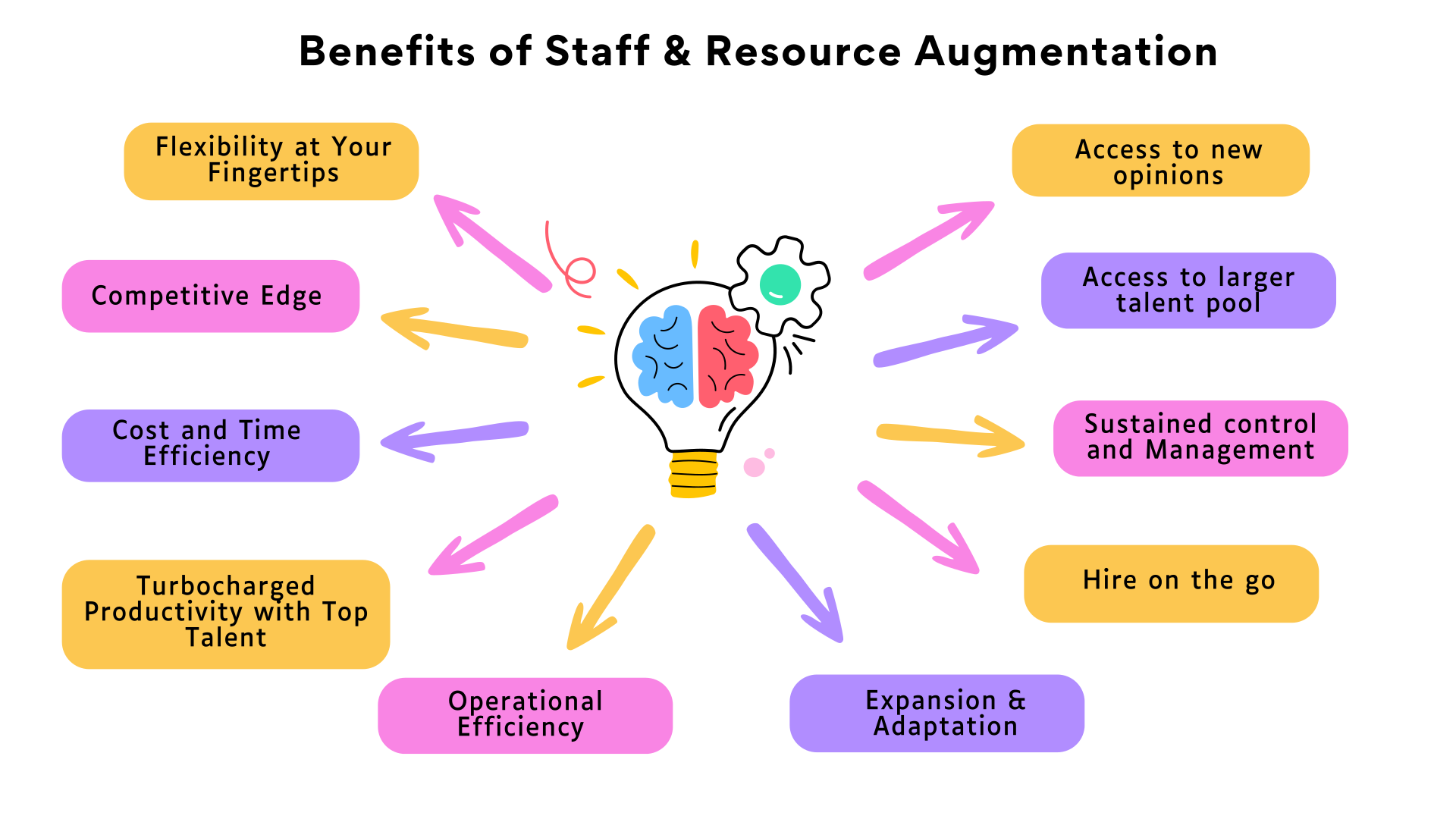
The Key Benefits of Staff Resource Augmentation
Before we walk you through the process of resource augmentation, let’s look at the key benefits of this strategy.
1. Flexibility at Your fingertips
Finding the right talent for your expanding organization can be exhausting, especially when you need app developers to boost your development team.
But fear not!
Resource augmentation offers a perfect solution, providing you with the flexibility to hire temporary individuals or teams for project-specific needs. This lets you test new projects based on market viability without long-term commitments.
2. Cost and time efficiency
Traditional full-time hiring is both time-consuming and costly. That’s where staff augmentation services come to your rescue!
They enable you to save precious time, money, and resources that you can invest elsewhere in your organization. With the timeshare model, you can tap into fractional payments for usually expensive resources (like hiring a web developer), maximizing cost and time efficiency.
3. Turbocharged productivity with top talent
Resource and staff augmentation providers boast of helping you employ the top 1% of talent.
Just imagine collaborating with stellar software engineers, UX designers, web and app developers, and Agile experts!
By bringing in specialized professionals for specific projects, you can unlock focused efforts dedicated to achieving your business goals. This level of productivity is often challenging to attain with an in-house team, who have multiple organizational responsibilities.
Staff augmentation empowers you to skyrocket your productivity when you need it most.
In a nutshell, staff resource augmentation empowers your organization to seamlessly adapt, optimize costs, and tap into exceptional talent.
So, why settle for the ordinary when you can supercharge your capabilities and achieve extraordinary results?
The Different Types of Resource Staff Augmentation
Staff augmentation is a powerful strategy for augmenting your workforce with external talent that fits your specific project needs.
Let’s explore the different types of staff augmentation and learn when to choose which one.
Commodity Staff Augmentation
Skill-Based Staff Augmentation
Highly-Skilled Staff Augmentation
This type of staff augmentation focuses on fulfilling general or common roles within your company.
These roles may include administrative support, data entry professionals, customer service representatives, or entry-level positions.
It is ideal for menial tasks and ensuring smooth operations while allowing your core team to focus on higher-value activities.
It involves hiring individuals with specialized skills and expertise that your in-house team lacks.
These roles may require in-demand skills, critical for the success of specialized projects. For example, experienced web developers, app developers, graphic designers, or marketing specialists.
It is ideal for fulfilling short-term requirements by tapping into the right talent pool.
This staffing model focuses on hiring top-tier professionals with extensive experience and advanced expertise.
These roles may include hiring senior-level executives, subject matter experts, or consultants to drive critical projects, provide strategic guidance, or bridge skill gaps.
It is ideal for bringing in industry-leading talent to tackle complex challenges and strategic initiatives to enhance the quality and efficiency of your project workflow.
How to Choose the Perfect Augmentation Partner for Your Projects [The Best Practices]
Selecting the ideal staff and resource augmentation partner may seem like a daunting task. However, fear not!
Before diving into the process of shortlisting potential augmentation partners, here’s a helpful checklist to ensure you make the right choice for your organization:
1. Assess your needs
Begin by clearly defining your project requirements and objectives.
Take stock of the skills, expertise, and resources you need to accomplish your goals.
Identify the in-house employees with similar skill sets.
Find skill gaps within your team and specify which resources can help bridge them.
Decide on the timeline of your project.
Specify what goals you want to achieve with resource and staff augmentation.
This evaluation will serve as your compass throughout the augmented staff selection process.
2. Look for partners with the required expertise and experience
Look for augmentation partners who have a proven track record in the specific areas you require. Consider their industry experience, client testimonials, and success stories.
A partner with relevant expertise will bring invaluable insights to the table and help enhance the quality of your projects.
Also, ensure that they are a good cultural fit for your company because smooth collaboration is key to any project’s success. Seek partners who align with your brand’s values, work ethic, and communication style.
3. Set clear expectations
Clear and open communication is vital when working with an augmentation partner.
To establish a solid foundation for resource and staff augmentation, it’s crucial that you:
Define the job roles and responsibilities of your outsourced and in-house team members. They should know their role in the project and how their contributions will affect the main goals.
Communicate your expectations regarding work quality, deadlines, and deliverables.
Define the performance metrics (KPIs) or milestones that can help both you and your augmented staff track progress and identify areas for improvement.
Designate project or team leaders who can provide guidance and oversee tasks to ensure efficient strategy execution.
4. Assess their reliability and trustworthiness
Dependability is crucial in an augmentation partner.
You should assess their reliability in meeting project deadlines, delivering on promises, and maintaining confidentiality. For this, you can review their past projects and ask for testimonials from clients they’ve worked with.
5. Consider cost and value
How much does it cost to hire an app developer with six years of experience?
While the cost of hiring an app developer is a deciding factor in staff augmentation, you should also consider the value they bring to the table.
Do you want an intermediate-level developer?
Or, do you want someone who can strategize and develop a top-notch product?
Remember, it’s not just about finding the cheapest option but the one that offers the best return on your investment.
6. Build a strong relationship with your augmentation partner
Did you know that about 86% of staff attributes business failures to a lack of effective collaboration and communication?
To make resource augmentation work in your favor, you need to employ the right talents and establish strong work relationships with them.
Your goal should be to bridge the gap between your outsourced and in-house teams and leverage the most of their capabilities to meet your project goals. Here’s how to do this:
Embrace transparency by sharing information and feedback.
Let everyone contribute their ideas and insights.
Use modern communication tools and technologies for seamless collaboration. Some useful platforms include Slack, ClickUp, Zoom, and Google Docs.
Schedule regular team meetings and check-ins to discuss project progress and address challenges.
Assign a dedicated project manager who is responsive and supportive for every project.
7. Regularly evaluate the performance of your partner
When using staff augmentation services, it’s crucial to have a robust performance assessment system in place. This will help ensure that your augmented staff members meet your company’s standards and expectations.
This process involves:
Assessing their performance diligently
Providing constructive feedback
Promptly addressing any concerns that may arise
Making necessary adjustments to optimize the results
This ongoing assessment will not only keep everyone accountable but also help you achieve your goals faster.
The Common Challenges of Resource Augmentation [+Solutions]
Resource augmentation offers numerous advantages, but it also comes with its fair share of challenges.
Let’s take a look at some of the common challenges that you’ll face while implementing staff and resource augmentation. We’ve also shared the most effective solutions to address each of these challenges.
Challenges
Solutions
Ineffective communication and coordination
Fostering open communication
Utilizing collaboration tools like Slack and Zoom
Cultural misalignment
Promoting cultural understanding
Failed expectations or quality control issues
Defining clear goals and responsibilities
Implementing performance evaluation processes
Investing in training
Project management and monitoring issues
Setting up a project management process
Leveraging powerful project management tools like ClickUp
Difference in time zones
Setting a working schedule that bridges the gap
The Key Takeaways From This Resource Augmentation Guide
Here we conclude our comprehensive guide on resource augmentation. By now, you should have understood:
What are the challenges of hiring an augmented staff (and solutions)?
In all, employee augmentation is an effective solution to hiring experienced professionals (like web developers) for increasing your productivity without the pressure of hiring a new in-house person.
By partnering with a resource augmentation service provider, you can find the right talent pool for a limited time and use their expertise to walk towards achieving your bigger business goals.
FAQs
What is resource augmentation and how can it help boost my team’s productivity?
Resource augmentation refers to the practice of supplementing your existing team with external resources, such as skilled professionals.
It can help boost your team’s productivity by providing access to additional expertise, skills, and resources when needed. By augmenting staff, you can scale up or down quickly, tap into niche talents, and complete projects more efficiently.
This will, ultimately, help accelerate your team’s output and overall productivity.
How can I determine the right resources to augment my team’s skills and capabilities?
To determine the right augmented resources for your team, keep these things in mind:
Understand your project’s needs.
Access the expertise and skills required to meet your project goals.
Evaluate your team’s expertise.
Find resources that can bridge the skill gaps within your team.
Ensure they fit your company’s values and work culture.
What are the key considerations when choosing a resource augmentation provider for my team?
When choosing a resource augmentation partner, consider these factors:
Ensure that they are familiar with your industry.
Check out the company’s experience and track record with resource augmentation.
Understand their pricing model.
Ask questions about their staffing process and how much time it takes usually.
Figure out if the provider offers flexibility in terms of scaling up or down as needed.
Ensure that they can handle risk.
Assess their past experiences with other companies to analyze their staff and resource management skills.
How can I measure the impact of resource augmentation on my team’s productivity and overall business performance?
To measure the impact of resource augmentation on the overall business performance, set specific key performance metrics (KPIs) and timelines. This will help you evaluate the performance of your augmented staff.
Be sure to assess their performance regularly to ensure that they are meeting your company’s standards.